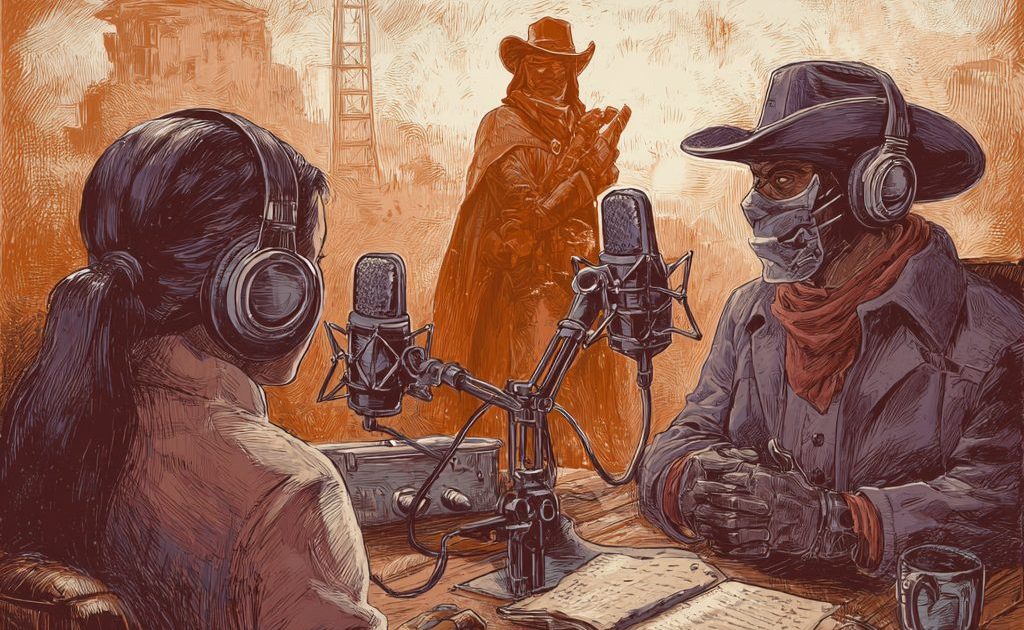
The Dwarkesh Method: Deep Preparation Beats Platform Volume Every Time
At 24, Dwarkesh Patel has cracked a code that most experienced podcasters miss entirely. He’s interviewing Mark Zuckerberg, Marc Andreessen, and Ilya Sutskever. Not because he has the biggest platform, but because he does something radical: he prepares like his reputation depends on it.
“If I do an AI interview where I’m interviewing Demis [Hassabis], CEO of DeepMind, I’ll probably have read most of DeepMind’s papers from the last couple of years,” Patel explains. “I’ve literally talked to a dozen AI researchers in preparation for that interview — just weeks and weeks of teaching myself.”
This isn’t just podcast strategy, it’s how trust scales in knowledge work.
The Trust Infrastructure Problem
Patel discovered something that every engineering leader knows but most platforms ignore: volume is the enemy of trust. In a world with over 5 million podcasts, getting noticed isn’t about optimizing for algorithms or posting more content. It’s about building relationships that compound.
The same dynamic plays out in engineering hiring every day. CTOs start with their network because it provides something platforms can’t: pre-existing trust and behavioral prediction. But networks have scale constraints. Eventually, you need what Patel built for podcasting — network-quality relationships at marketplace scale.
“Most of the prep I do just doesn’t end up being useful,” Patel admits. “But some of the things I end up reading, even randomly on my own time, lead to interesting conversations.”
This is exactly how experienced engineering leaders think about talent relationships. Most conversations don’t lead to immediate hires. But the depth of preparation and genuine understanding creates a foundation that pays dividends when the right opportunity emerges.
Why Preparation Compounds
When Bryan Caplan became Patel’s first guest, it wasn’t because of Patel’s existing audience (he didn’t have one). It was because Patel had done something rare: he’d actually read Caplan’s work deeply enough to ask questions that Caplan hadn’t heard before.
“Caplan enjoyed the podcast so much that he recommended it to Tyler Cowen,” Patel recalls. “From there, it just became something I did on the side while in college.”
This is network-effect scaling in action. One quality relationship led to another, which led to another. But notice what didn’t scale: the preparation. Patel still spends a week preparing for each interview, regardless of his growing influence.
Engineering partnerships work the same way. When a technical leader finds someone who genuinely understands their domain and has invested time in learning their specific challenges, that relationship becomes a recommendation engine. They tell other technical leaders. Those leaders experience the same depth of preparation and domain understanding. The network grows, but the quality remains consistent.
The Platform Fatigue Cycle
Patel’s approach reveals why most platforms eventually disappoint technical leaders. He notes that many established podcasters “sometimes don’t feel like they’re trying.” When something becomes purely transactional — optimized for volume and efficiency — the depth disappears.
“Most popular podcasters just walking into a studio after just a single day of prep,” he observes. “It’s like this is your full-time job, man. Why don’t you spend a week or two instead?”
This is exactly the pattern that kills trust in talent platforms. What starts as a solution to scale constraints becomes a volume optimization problem. The preparation disappears. The domain understanding disappears. The behavioral prediction disappears. You’re left with transactions, not relationships.
Engineering leaders know this intuitively. They’ve tried the platforms. They’ve experienced the volume-over-quality dynamic. That’s why they keep coming back to network hiring, despite its scale limitations.
Network-Quality at Marketplace Scale
The fascinating insight from Patel’s success is how he’s engineered network-level trust into a scalable system. He doesn’t just interview people, he builds preparation infrastructure that creates predictable relationship quality.
“In my case, it was just that I decided that I was going to spend a week preparing for a podcast episode instead of just a day,” he explains. “That doesn’t seem like it should have been the case.”
This is the missing piece in engineering talent infrastructure. Most platforms optimize for matching speed or cost efficiency. But what technical leaders actually need is preparation infrastructure — systems that create network-level understanding at marketplace scale.
At Gun.io, we’ve built exactly that. Instead of optimizing for volume, we optimize for preparation depth. Instead of treating engineering partnerships as transactions, we treat them as relationship infrastructure that compounds over time.
The Preparation Infrastructure Advantage
When Patel interviews someone like Patrick Collison, it’s not just because he has access. It’s because Collison knows the interview will be worth his time. The preparation creates a guarantee of quality that busy, high-leverage people depend on.
“Everything that is relevant to understanding society is relevant to understanding AI,” Patel notes about his preparation approach. This systems thinking — understanding how domains connect — is exactly what distinguishes network-quality relationships from platform transactions.
Engineering leaders think the same way. They don’t just need someone who can code. They need someone who understands how their technical decisions connect to business outcomes, team dynamics, and long-term architecture evolution. This requires preparation infrastructure, not just matching algorithms.
Why This Matters for Engineering Leadership
Patel’s story matters because it demonstrates that trust still scales, but only when you engineer for it deliberately. His success isn’t about disrupting podcasting through platform innovation. It’s about bringing network-level relationship quality to a domain that had settled for platform-level transactions.
The same opportunity exists in engineering talent. The choice isn’t between limited networks and “tried and terrible” platforms. The choice is between accepting current constraints or building infrastructure that scales trust itself.
Every engineering leader follows the same hiring hierarchy: network first, team’s extended network second, then they hit a wall. What Patel built for podcasting is what technical leaders need for engineering capacity: your network at scale.
Gun.io provides on-demand engineering talent — network-quality relationships at marketplace scale. We’re not a platform. We’re your network at scale, built for engineering leaders who understand that great execution comes from partnerships, not transactions.